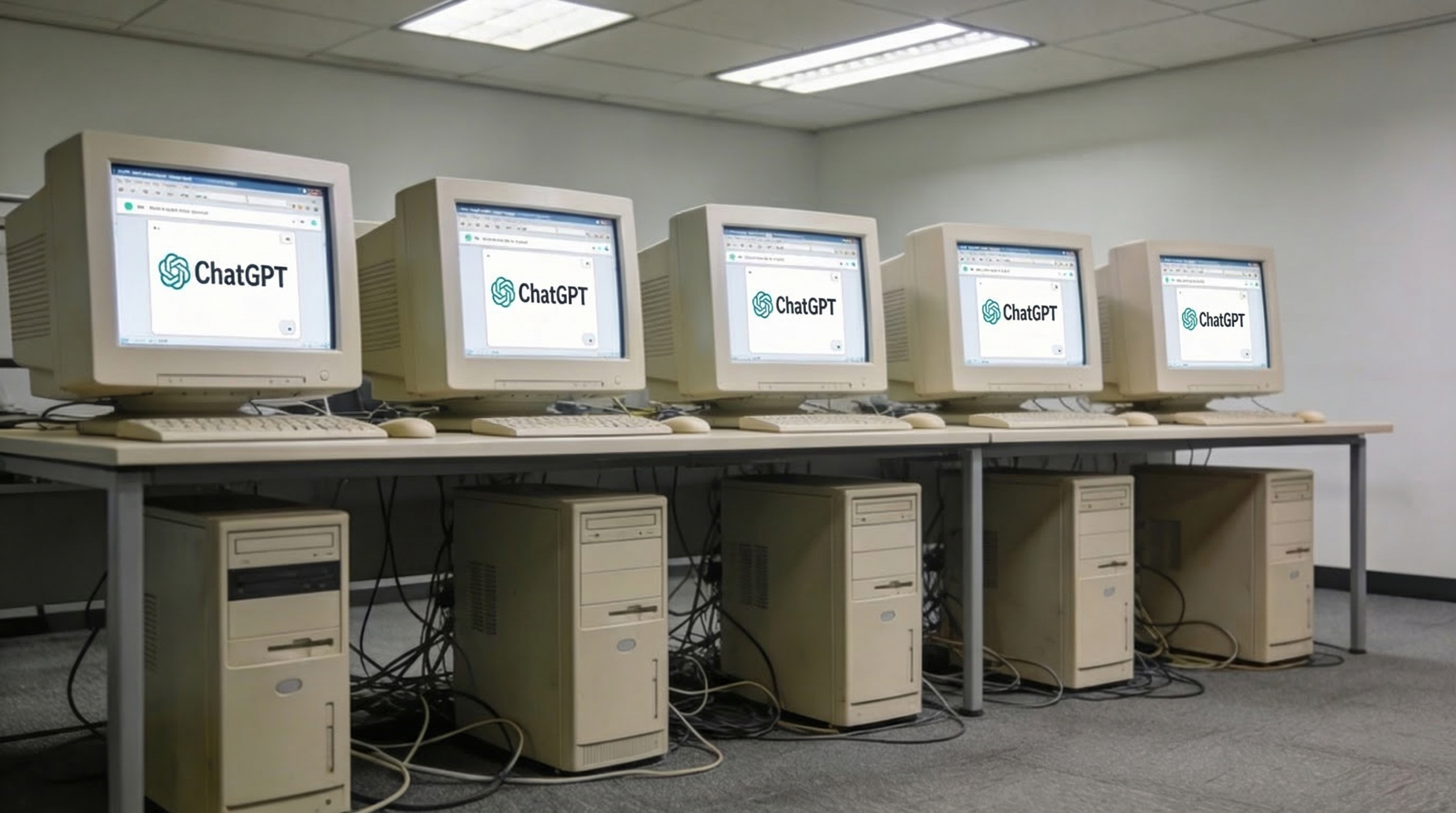
Every AI strategy deck assumes the organization will absorb the technology. Most won't. The gap is rarely about tooling — it's about decision rights, incentives, and the muscle memory of how work actually gets done.
What culture debt looks like
Culture debt is the gap between the AI capability you've bought and the organizational capacity to use it. Symptoms include:
- A €2M ML platform with three active users
- Models that get built but never deployed because no team owns the decision
- "AI projects" that are actually data-cleaning projects in disguise — for the third year running
- Pilots that never graduate to production because the receiving team rejects the output
- A Chief AI Officer who can't name three outcomes from the last 12 months
None of these problems are technical. All of them surface at deployment.
Why it accumulates
Three forces compound:
Decision rights aren't redistributed. An AI model that recommends a credit limit is useless if no one is allowed to act on its output without manual review. Most organizations install AI on top of existing approval chains and wonder why throughput doesn't improve.
Incentives still reward the old behavior. If your sales team is bonused on volume, no AI lead-scoring model will change their behavior. They'll call the leads they've always called.
Muscle memory is invisible. Teams have decades of accumulated heuristics about how to do their job. AI outputs that contradict those heuristics get filtered out — not maliciously, just instinctively.
How to diagnose it
Three questions, with brutal honesty:
For the last AI project that shipped, who is the named operational owner? (If the answer is "data science" or "IT," it failed.)
What decision used to take human judgment that the AI now makes autonomously? (If none, you've built decision support, not AI.)
What metric moved as a direct result of the AI? (If you can't name it, no one is using the model.)
What works
Co-located deployment. Embed an ML engineer with the operational team for the first 90 days post-launch. They'll surface the workflow frictions that nobody mentioned in the spec.
Decision rights redesign before the model. Before building, agree what the AI can do without human review, what it flags for review, and what it never touches. Most teams skip this step and bolt it on after — by which point the receiving team has built a wall.
Sunset the manual workflow. The hardest one. As long as the old way still exists, people will revert to it under stress. The bravest companies set a date, communicate it, and shut down the old workflow — even imperfect AI is better than parallel processes that erode both.
The honest truth
You can't catch up culture debt with another platform purchase. The fix is governance, incentive design, and discipline about deployment. None of that is glamorous. All of it is what separates the companies extracting value from AI from the ones still announcing pilots in their annual report.